Custom Solutions

Logo & Branding

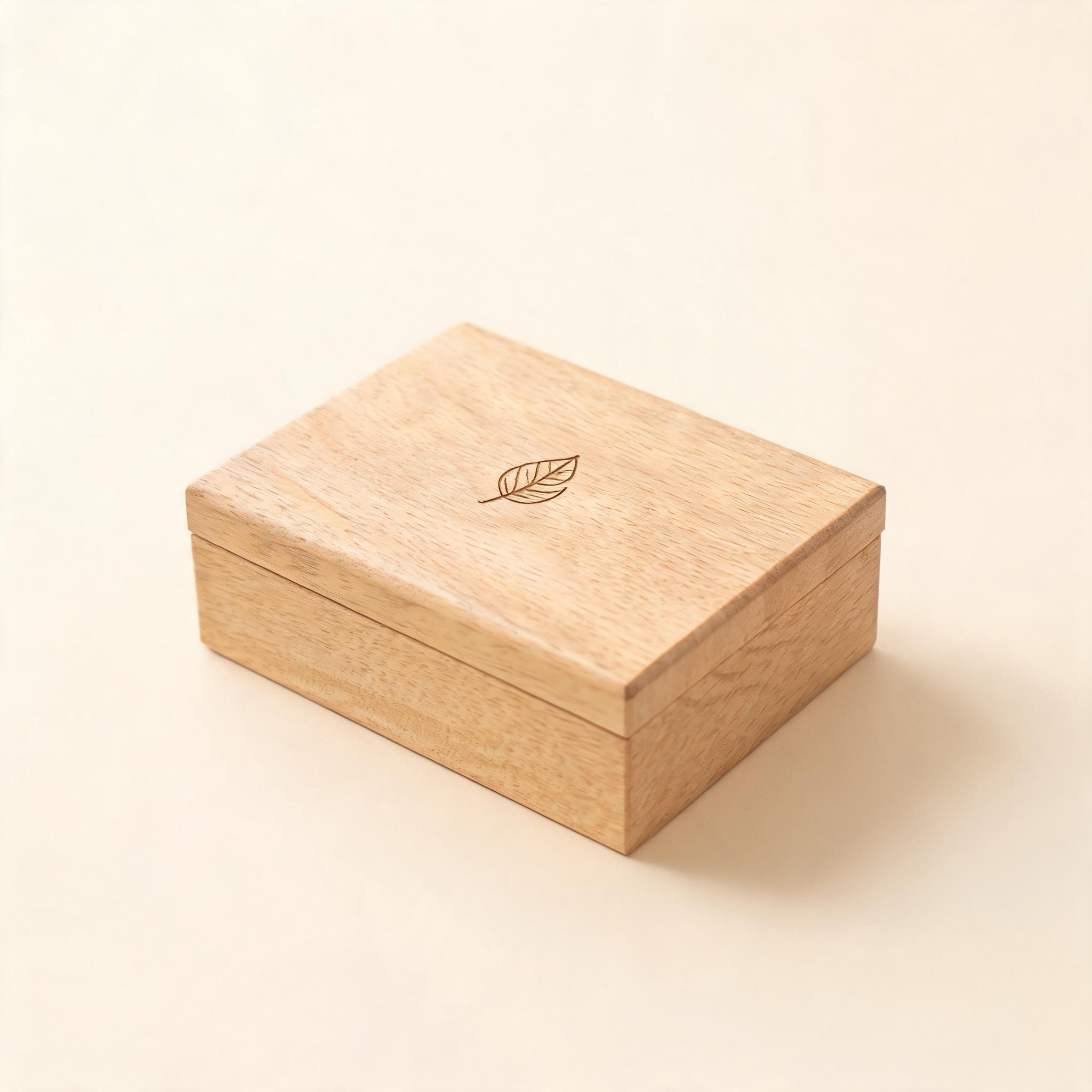
Engraving, foil, print or inlay — the technique decides whether the mark looks made for the material.

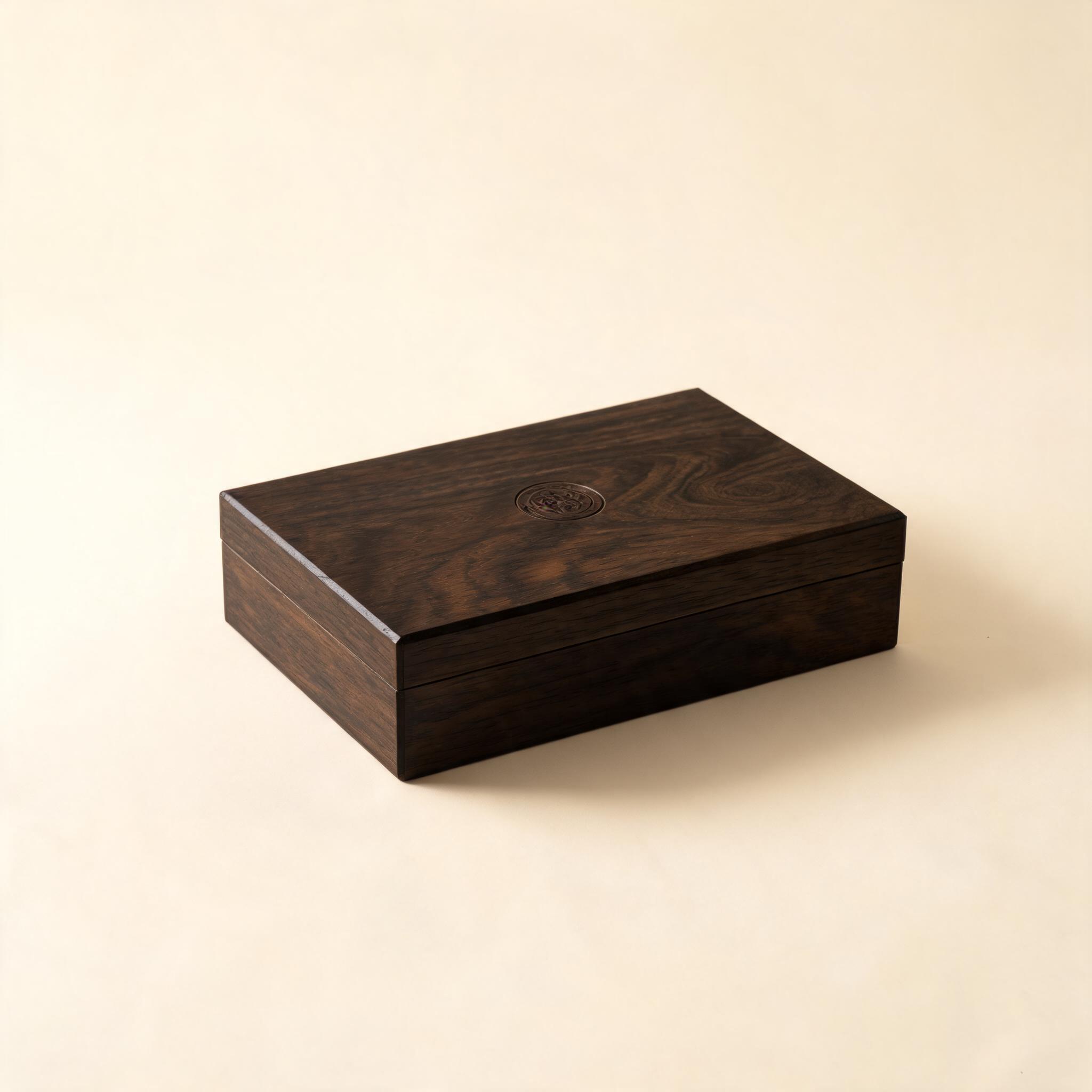
A logo applied to wood can look like it belongs there or like a sticker with extra steps. The difference is almost always the technique chosen against the species: fine detail disappears into coarse grain, and a gold foil on dark walnut can vanish at the wrong angle.

We recommend the application after seeing the artwork and the wood together, and we produce the mark on the actual surface so the decision is made on evidence.

The brief behind it

Four techniques, four different marks

The four main techniques do not just differ in cost — they produce genuinely different objects. Engraving removes material, so the mark is a depression you can feel. Foil deposits a thin metallic layer that sits proud of the surface. Print lays colour on top. Inlay replaces a piece of the surface with another material.

That matters because the mark is read in the hand as much as in the eye. A debossed or engraved logo says the packaging was made for this brand; a printed logo says the packaging was labelled.

The practical selection rule is about detail and surface. Fine lines and small type suit print or a metal plate; bold marks and large areas suit engraving or foil; anything on a curved or heavily grained surface needs testing before it is specified.

What you can specify

Logo & Branding — the decisions that matter

Every point below is developed with you and confirmed on a physical sample before production.

Techniques

  • Laser engraving — permanent, tactile, single tone
  • Hot foil stamping — gold, silver and custom foils
  • Silk-screen print — solid colours and larger areas
  • UV print — full-colour artwork and gradients
  • Metal plates and inlay — flagship and award pieces

Placement

  • Lid top, lid edge, front face and spine
  • Inner platform and underside of the lid
  • Repeat marks across a set or a range
  • Variable data for names, dates and serials

Artwork rules

  • Vector files with fonts converted to outlines
  • Minimum line weights raised for engraving and foil
  • Fine detail removed from very grained species
  • A proof on the real wood before production

Not sure what to specify?

Send the product dimensions, an approximate quantity and the date you need it. We come back with structure, material and finish options — and a clear quotation.

Start a project

At a glance

Application methods at a glance

What each method actually does to the surface, and when it is the right choice.

Laser engraving
Burns into the wood: permanent, tactile, single tone. Best on light, fine-grained species.
Hot foil
A metallic layer pressed on. Crisp and premium on dark wood; weaker on coarse grain.
Silk-screen print
Solid colours and larger areas. Needs a flat surface and a decent quantity.
UV print
Full-colour artwork and gradients. Needs an opaque base coat on dark wood.
Metal plate
A separate part fixed to the lid. The most premium option and the most expensive.
Inlay
A contrasting wood or metal set into the surface. Reads as craftsmanship, not decoration.

Why it matters

What the technique decides

These are the choices this page decides. Getting them right at the sampling stage is what keeps cost and rework out of production.

Discuss your project

In practice

  • Whether the mark reads at shelf distance or only in the hand
  • Whether it survives years of handling or wears at contact points
  • Whether a reorder reproduces the same mark
  • How much of the unit cost is decoration rather than the box

Who buys this

Who this decision matters most to

The same product is specified very differently depending on who is buying it. These are the briefs we see most often.

  • Marketing & brand teamsThe mark has to be correct across every surface and every reorder.
  • Small brands on a first runNo plate cost matters more than technique prestige at low volume.
  • Gifting programmesVariable names and dates need a method that changes per unit without retooling.
  • DesignersArtwork that works on paper often needs redrawing for wood, and that has to be caught early.

Common questions

Questions we get about logo & branding

Which technique survives handling best?

Engraving and inlay are the most durable because the mark is in the material. Foil and print sit on the surface and wear at high-contact points, so placement matters as much as the method.

Can you brand the inside as well as the outside?

Yes, and it is worth doing: the inner platform or the underside of the lid is where a message lands when the box is opened.

What artwork do you need?

Vector artwork — AI, EPS or PDF — with fonts converted to outlines. If you only have a raster logo, tell us and we will advise on redrawing before production.

Which method is cheapest for 100 units?

Usually engraving, because there is no plate or screen to amortise. Print and foil become cheaper per unit at higher volumes — we quote the options side by side.

Can you print a photograph on wood?

UV print can reproduce photographic artwork, but the grain will show through in the mid-tones. It works best on a filled, painted surface rather than raw timber.

Why does foil look patchy on some woods?

Foils need a smooth surface to transfer evenly. Open-grain or heavily textured woods, and surfaces with a strong clear-coat build, transfer unevenly.

Can you match a Pantone colour in print?

Yes, against a physical reference. Ink on wood shifts with the base tone, so approval is always on a printed sample rather than a paper swatch.

Related

Also worth looking at

Colors & Surface Treatments — illustrative product photo

Colors & Surface Treatments

Wood does not have to look wooden — colour and texture let the box carry a brand without losing the material.

Read more
Branded Wooden Packaging — illustrative product photo

Branded Wooden Packaging

Your logo and identity applied by engraving, printing or inlay across the pack.

Read more
Hardware & Accessories — illustrative product photo

Hardware & Accessories

Small metal parts decide how the box feels to open — and whether it stays closed in transit.

Read more

Back to the range

Tell us what you're making

Send the brief — we'll come back with structure, material and finish options for logo & branding, plus a clear quotation.