
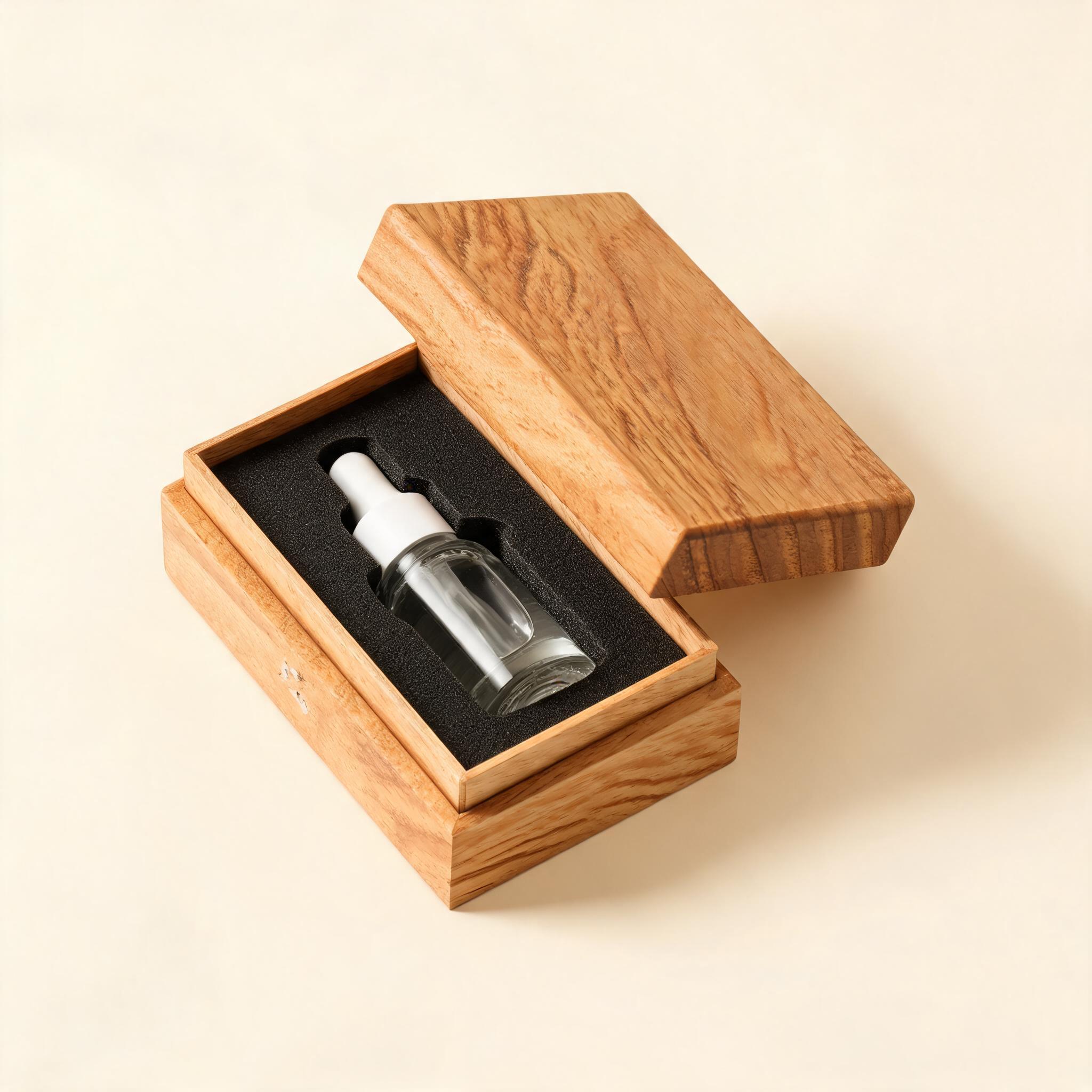
Formats we develop
- PR and influencer kits engineered for top-down filming
- Skincare and gift-set cases with fitted bottle inserts
- Candle and fragrance packaging where weight signals quality
- Countertop and riser displays for boutique retail
Industries
In beauty, the unboxing is a marketing channel. Wooden cases are designed to be opened on camera — and to keep the product safe until that moment.
Beauty brands sell transformation, and the packaging is the first proof of it. A wooden case signals weight and care in a category dominated by folding cartons, which is why it performs so well for launches and PR moments.
The engineering is about bottles and jars: glass is heavy, shapes are irregular, and leakage in transit ruins everything. Inserts are cut to the container outline, and we allow for the headspace and closures that glass needs.
The brief behind it
Beauty packaging competes in a narrow visual field. Most competitors use board, plastic or a combination, and the resulting sameness makes material the fastest way to differentiate. Wood reads as considered, durable and — importantly — expensive.
It also survives the category's content cycle. Beauty launches are filmed, photographed and posted, and a wooden case holds up in close-up in a way that a printed carton does not: edges stay sharp, the surface does not crease, and the box can be opened repeatedly during a shoot.
The constraints are real, though. Glass is heavy and fragile, formulas can leak, and a case that holds a bottle upright needs internal structure rather than a simple cavity. Most of the design work is in that structure.
What you can specify
Every point below is developed with you and confirmed on a physical sample before production.
Send the product dimensions, an approximate quantity and the date you need it. We come back with structure, material and finish options — and a clear quotation.
Start a projectAt a glance
What beauty packaging has to handle, and how we design around it.
Why it matters
These are the choices this page decides. Getting them right at the sampling stage is what keeps cost and rework out of production.
Discuss your projectWho buys this
The same product is specified very differently depending on who is buying it. These are the briefs we see most often.
How we run it
We are a sourcing and product development partner rather than a single factory. Your project is matched to a specialist workshop in our manufacturing network, and one team stays accountable for the drawing, the sample, the production schedule and the inspection before dispatch.
Your product, sketch or reference photo becomes a working drawing: internal dimensions, wall thickness, opening mechanism and insert layout, with the trade-offs priced.
Before a full sample is made, you compare species, stain and coating on physical boards under your own lighting — the fastest way to avoid a colour surprise.
A physical sample of the actual construction is made and shipped for approval. Nothing goes into a production run before you sign off on it.
The approved sample becomes the standard. We coordinate the schedule with the workshop best suited to the structure, material and quantity, and report progress.
Units are checked against the approved sample during and after production — dimensions, finish, hardware and branding — then packed for the shipping route.
Export cartons, packing lists and shipping documents are prepared against the agreed trade term, and the shipment is coordinated with your forwarder or delivered to the named port.
Common questions
Yes, if the insert holds each container upright and isolated. We design for the bottle outline and the closure height, then add outer protection for the parcel route.
Not if the finish is chosen well. Painted matte surfaces, clean edges and restrained engraving read contemporary; heavy stain and ornate hardware read traditional.
Yes — keep the outer case and revise the insert for each SKU. It is the most economical way to build a family of packs.
Upright orientation, closure clearance and a cavity that stops the bottle rocking. For liquids with a known leak risk, we also specify an inner seal and test the layout with filled containers.
It is heavier than board, and that affects freight. The trade-off is usually worth it for launch and gifting sets, less so for high-volume repeat SKUs.
With a sealed interior finish, yes. Unsealed timber will stain, so we specify a coating inside the cavity when the contents are liquid.
Yes — risers and trays in the same wood and finish, so the retail presentation and the customer's case are consistent.
Usually yes. The outer case stays; the insert is revised for the new bottle or set, which avoids new wood tooling.
Related
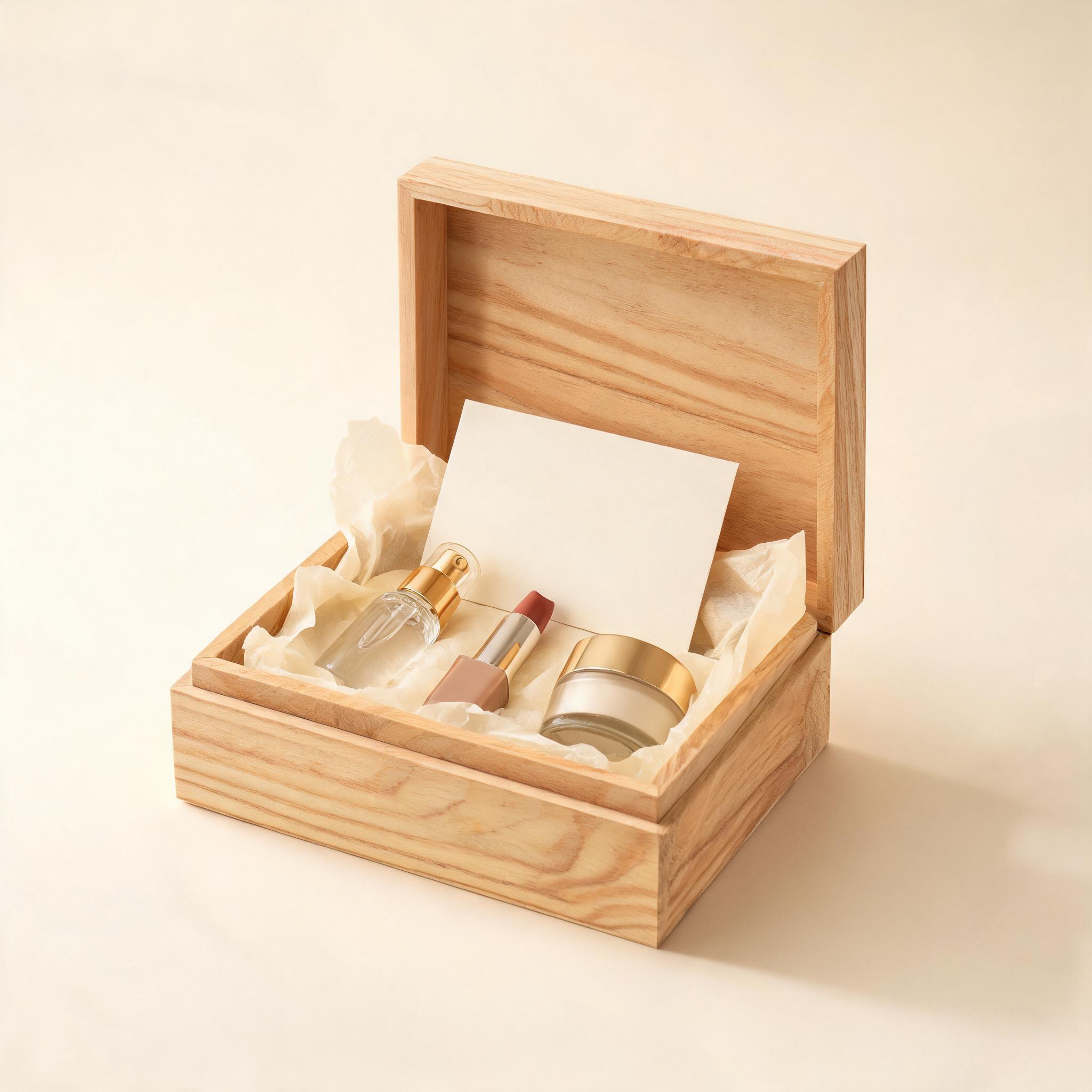
Unboxing moments designed to be photographed, filmed and shared.
Read more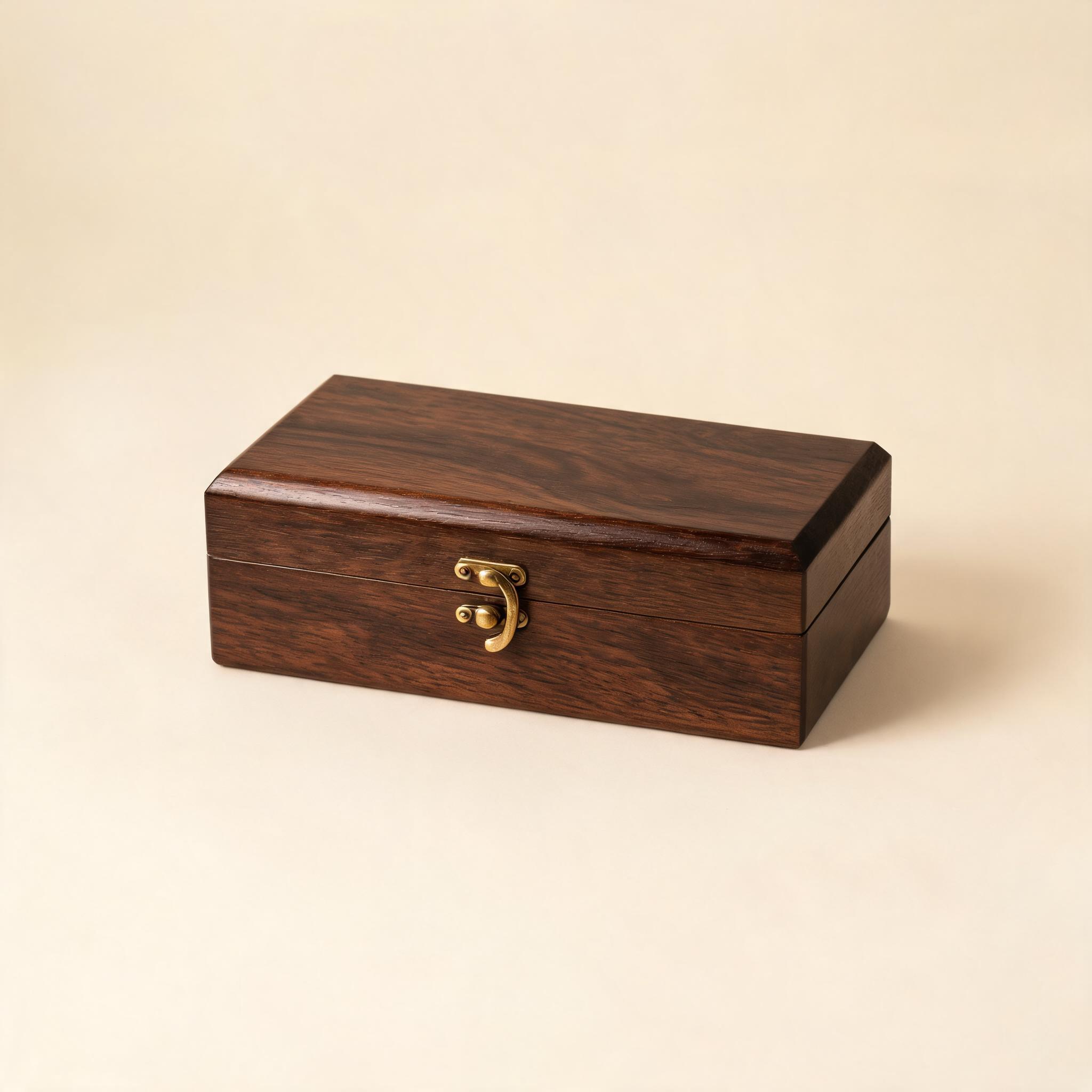
Weighted woods, soft-touch finishes and layered interiors for premium launches.
Read more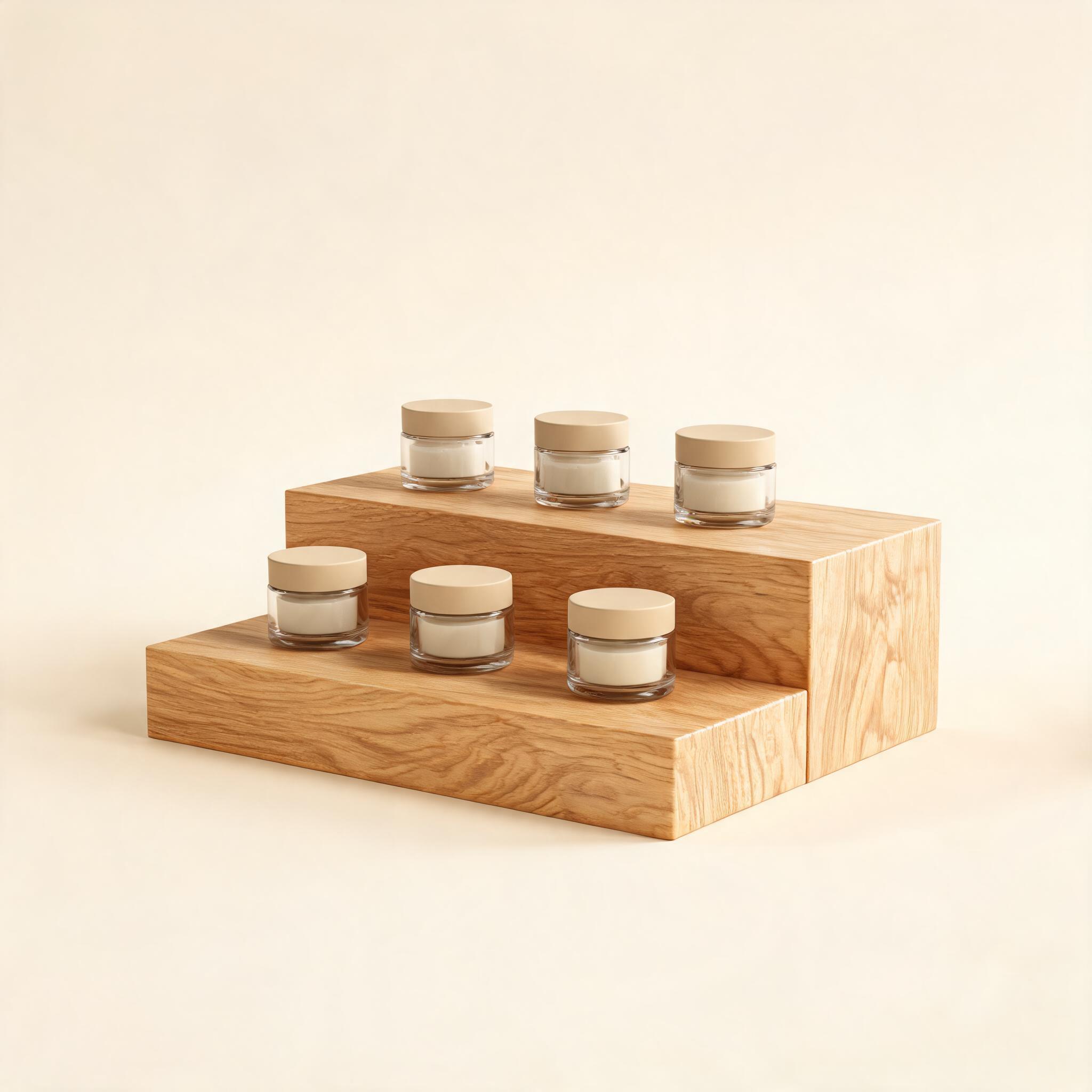
Compact counter units that keep the product visible and within reach.
Read moreBack to the range
Send the brief — we'll come back with structure, material and finish options for beauty & skincare, plus a clear quotation.