
Formats we develop
- Multi-compartment tea boxes for sachets and tasting flights
- Sliding-lid caddies and canister sets
- Coffee gift packaging for roasters and subscription brands
- Seasonal sets bundling product, accessory and story card
Industries
Presentation is part of the ritual. A wooden tea box turns an everyday product into something that gets given, displayed and refilled.
Tea and coffee brands sell a ritual, not a commodity. The box is where that ritual becomes physical: the lid lifts, the compartments reveal the range, and the packaging stays on the counter long after the first cup.
The practical constraint is freshness. Wooden boxes need an inner barrier for loose leaf and roasted beans, so we design the wooden case as the presentation layer and specify the inner bag, tin or food-safe lining that does the protecting.
The brief behind it
Most tea and coffee packaging is designed to be invisible — a barrier that keeps air out and is thrown away in seconds. Wooden packaging does the opposite job: it gives the product a place in the room, and it stays there.
That is why the category works so well with wood. A caddy on a counter, a tasting box opened at a table, a gift set handed over at a holiday — these are moments where the container is part of the product experience rather than a cost to be minimised.
The trade-off is technical, not aesthetic. Wood is not airtight, so the freshness job has to move to an inner layer. Once that is accepted, the wooden exterior is free to be designed around compartments, visibility and the way the box is opened.
What you can specify
Every point below is developed with you and confirmed on a physical sample before production.
Send the product dimensions, an approximate quantity and the date you need it. We come back with structure, material and finish options — and a clear quotation.
Start a projectAt a glance
What tea and coffee packaging has to handle, and how we design around it.
Why it matters
These are the choices this page decides. Getting them right at the sampling stage is what keeps cost and rework out of production.
Discuss your projectWho buys this
The same product is specified very differently depending on who is buying it. These are the briefs we see most often.
How we run it
We are a sourcing and product development partner rather than a single factory. Your project is matched to a specialist workshop in our manufacturing network, and one team stays accountable for the drawing, the sample, the production schedule and the inspection before dispatch.
Your product, sketch or reference photo becomes a working drawing: internal dimensions, wall thickness, opening mechanism and insert layout, with the trade-offs priced.
Before a full sample is made, you compare species, stain and coating on physical boards under your own lighting — the fastest way to avoid a colour surprise.
A physical sample of the actual construction is made and shipped for approval. Nothing goes into a production run before you sign off on it.
The approved sample becomes the standard. We coordinate the schedule with the workshop best suited to the structure, material and quantity, and report progress.
Units are checked against the approved sample during and after production — dimensions, finish, hardware and branding — then packed for the shipping route.
Export cartons, packing lists and shipping documents are prepared against the agreed trade term, and the shipment is coordinated with your forwarder or delivered to the named port.
Common questions
Not reliably for loose leaf or roasted coffee. Wood is breathable and not airtight, so we specify an inner barrier — a tin, a barrier bag or a sealed liner — and treat the wooden box as the presentation and protection layer.
Yes. Send the tin dimensions and we lay out the dividers around them, including finger clearance so each tin can be lifted out easily.
Yes — trays and countertop units in the same wood and finish, so the retail presentation and the customer's box read as one range.
Not directly for most products. We specify a food-safe lining or an inner container, and confirm the materials available for your market's requirements when quoting.
Wood moves with humidity, which can affect lid fit. For long sea routes we allow for that in the tolerances and use a sealed inner barrier so the product is not exposed.
Yes, and it is a strong argument for wooden packaging. A caddy sized to a standard tin refill keeps the brand on the counter long after the first purchase.
Four to six works well for tasting; eight to twelve for a range box. Beyond that the compartments get too small to hold a usable quantity.
Yes — engraved or printed names on the dividers, or numbered recesses with a printed key on the lid. Both are laid out during sampling.
Related
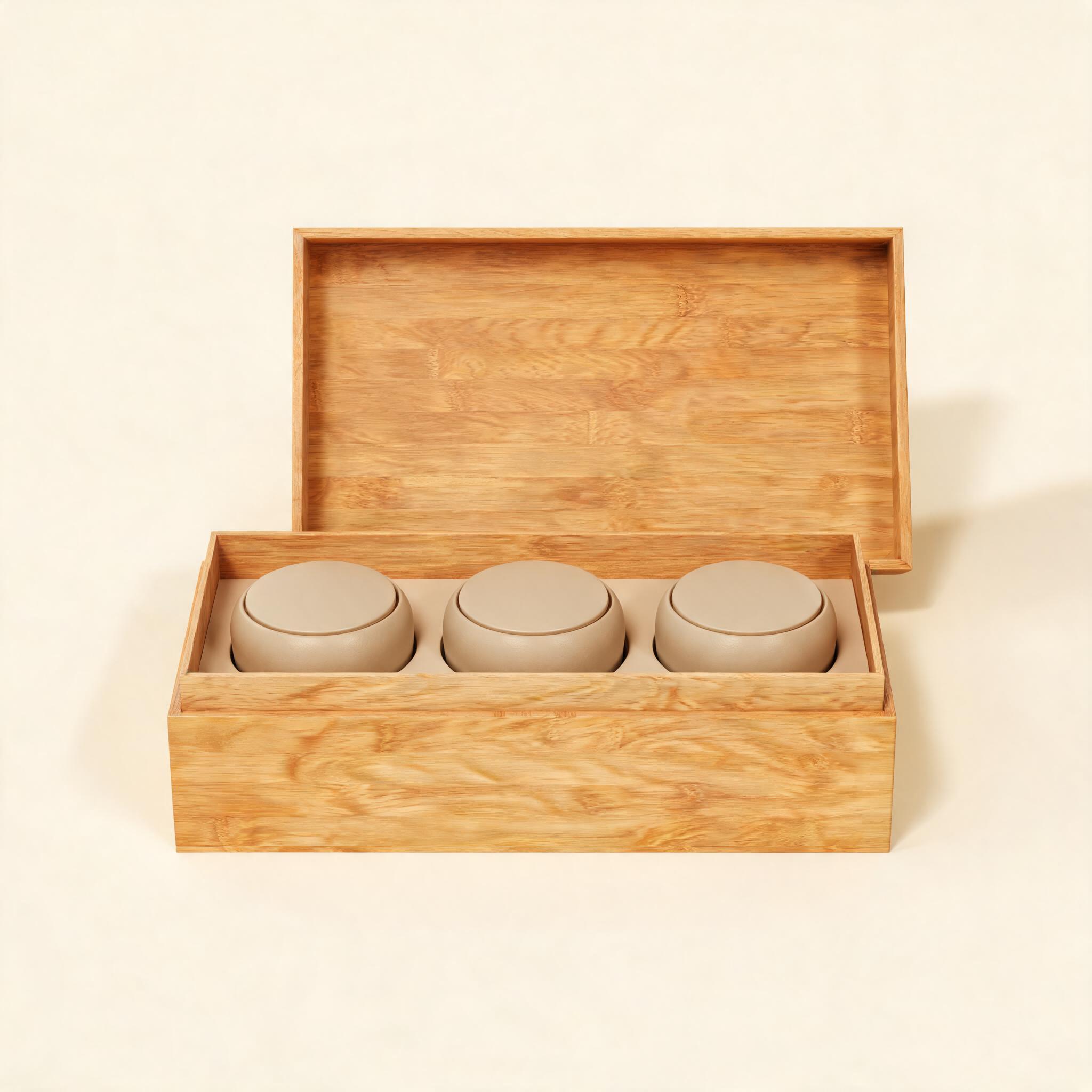
Tea caddies and multi-compartment boxes for tea brands, tastings and gift sets.
Read more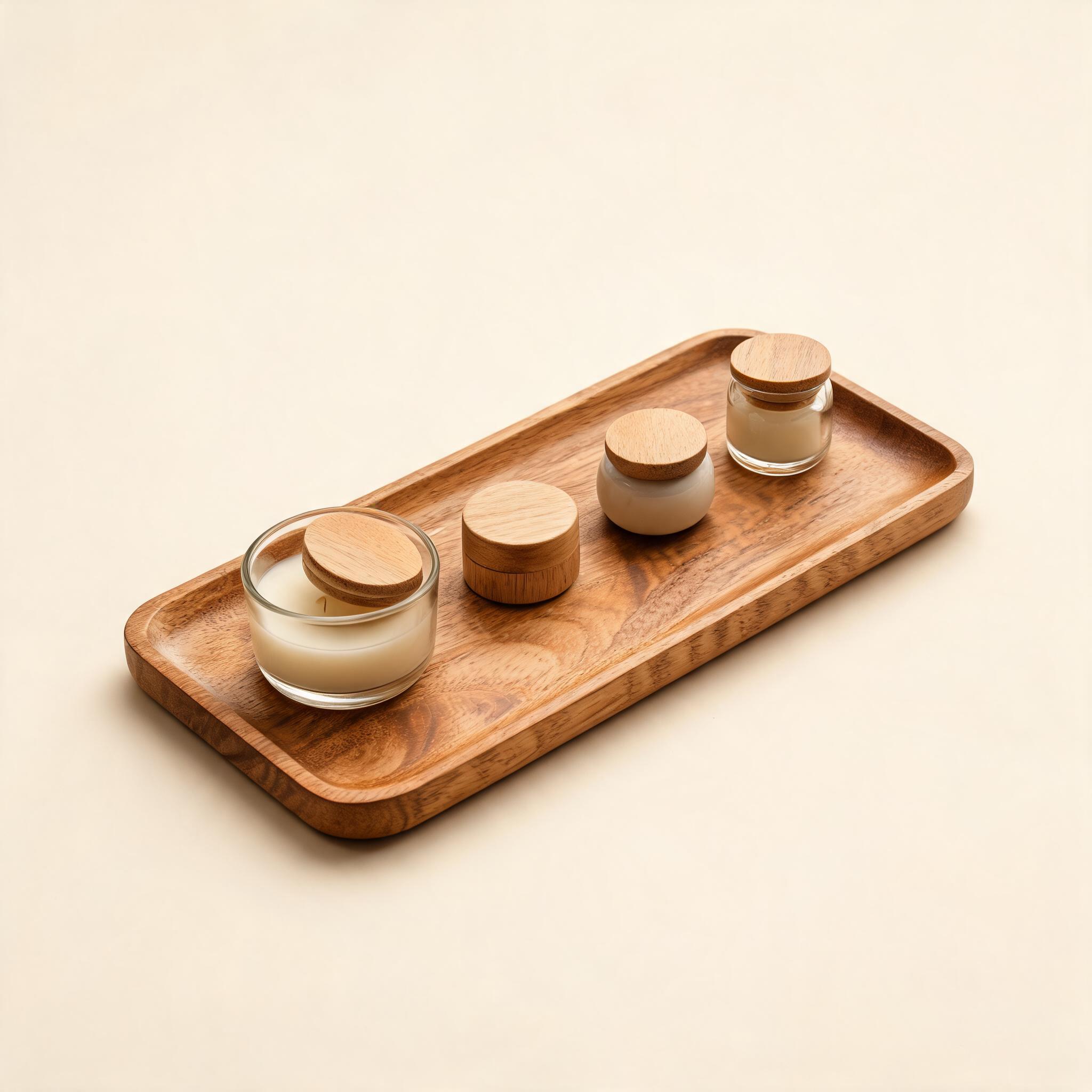
Trays and risers that organize, elevate and group products for sale.
Read more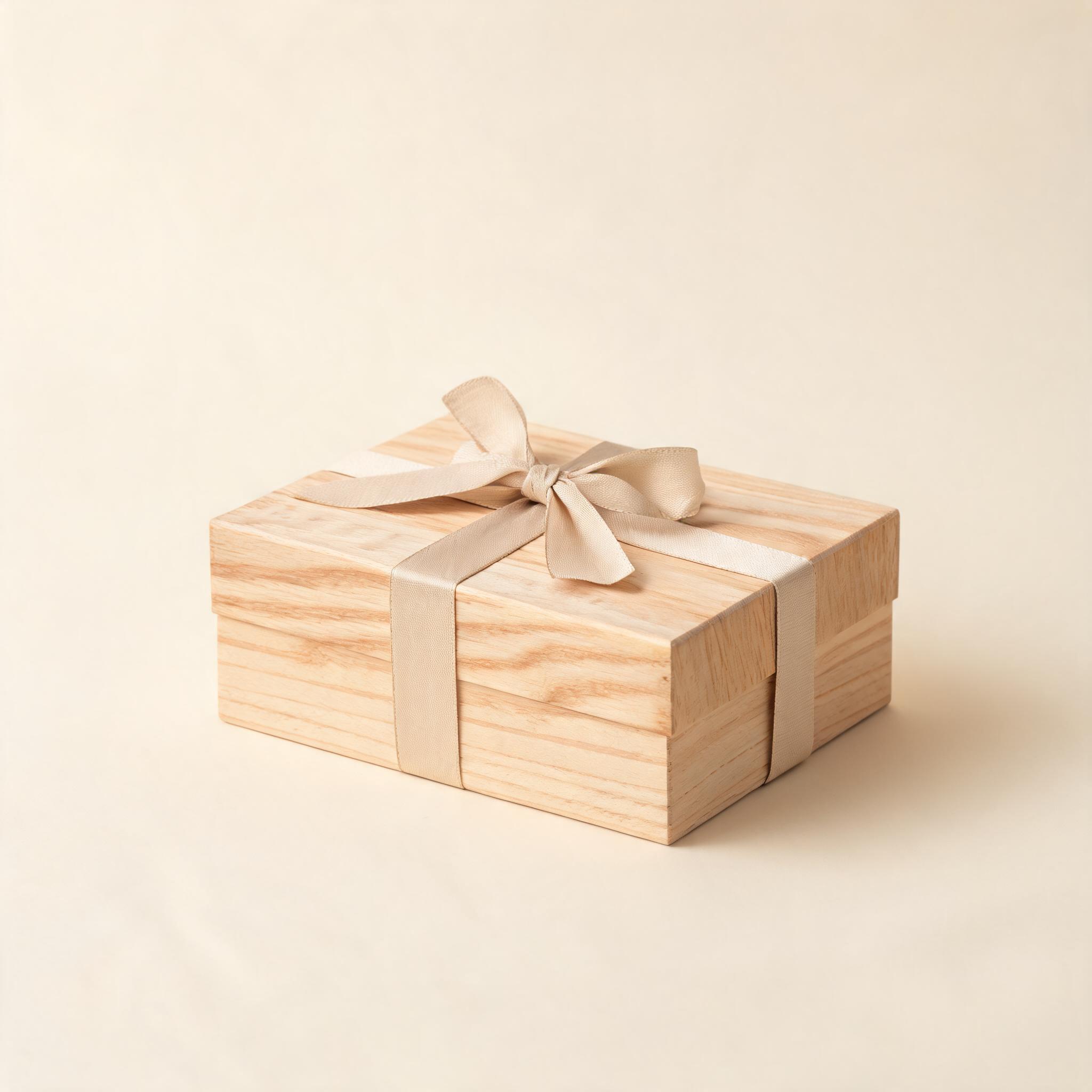
Gift-ready wooden boxes for retail lines, seasonal campaigns and brand promotions.
Read moreBack to the range
Send the brief — we'll come back with structure, material and finish options for tea & coffee, plus a clear quotation.