
Organization
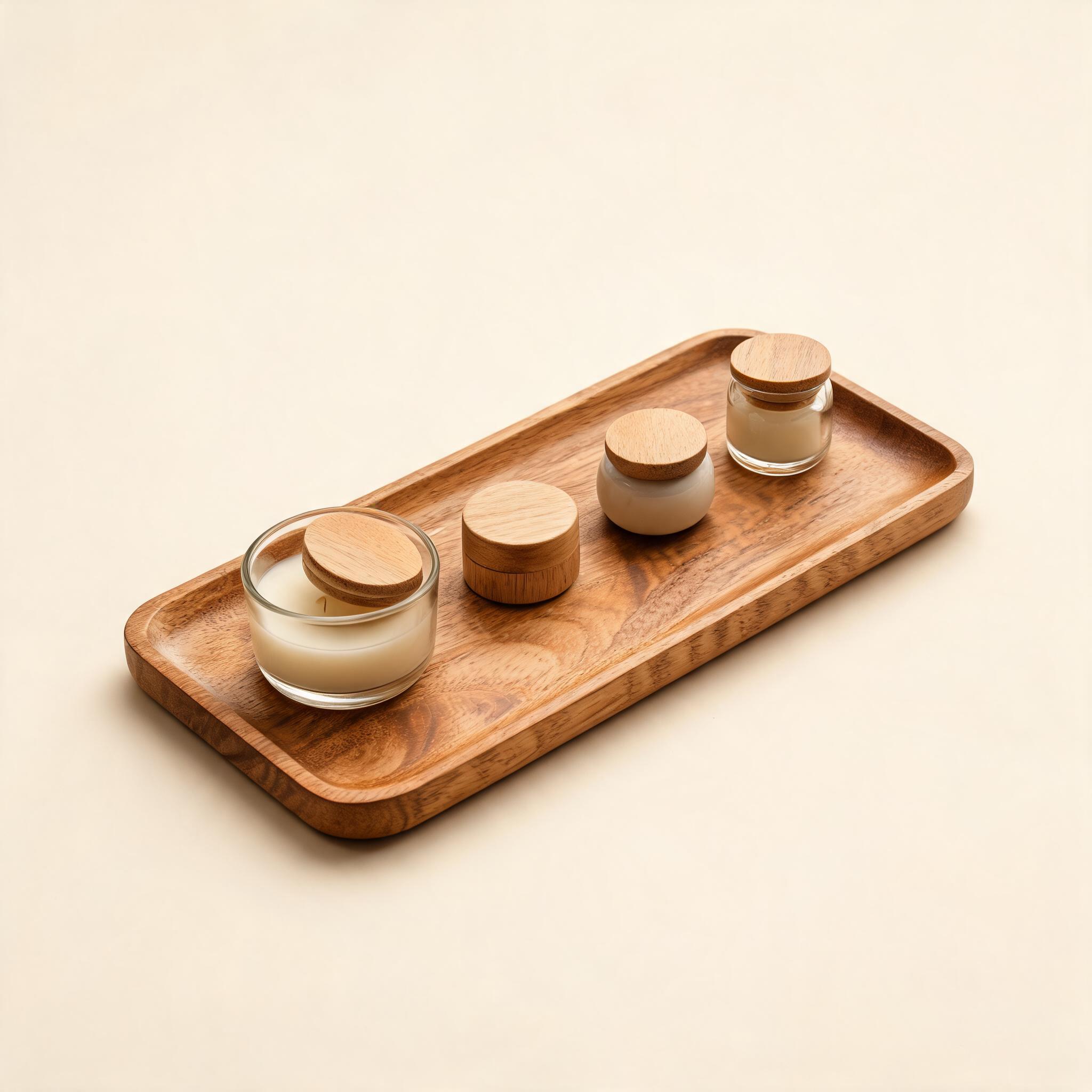
- Divided, recessed or open tray formats
- Risers and tiered stackers for depth
- Removable inserts for changing assortments
- Sized to standard retail shelf and counter depths
Wooden Display Solutions
Trays and risers that organize, elevate and group products for sale.
A tray is the simplest display unit and often the most useful: it groups a range, lifts it off the counter and defines where one collection ends and the next begins.
We build trays around SKU count and product size, with dividers or recesses that keep the range aligned as customers handle it — a display that self-recovers through a trading day.
The brief behind it
A tray does not sell a product; it explains a range. By grouping items inside a defined edge, it tells the customer these belong together, and by lifting them slightly it separates the collection from whatever is beside it.
The second job is self-recovery. Customers pick up, put down and rotate products. A tray with shaped recesses or dividers returns the range to a readable arrangement with minimal staff attention; a flat tray becomes a heap by mid-afternoon.
Depth is the variable most often got wrong. A tray that is too deep lets products slide forward and hide each other; a tray that is too shallow looks empty once one item is sold.
What you can specify
Every point below is developed with you and confirmed on a physical sample before production.
Send the product dimensions, an approximate quantity and the date you need it. We come back with structure, material and finish options — and a clear quotation.
Start a projectAt a glance
The six decisions that define this product. Change one and the cost, weight and lead time move with it.
From our catalogue
Real pieces from our supplier catalogue. Click a photo to enlarge it; click a name to open the item. Your own version is developed to order around your product.
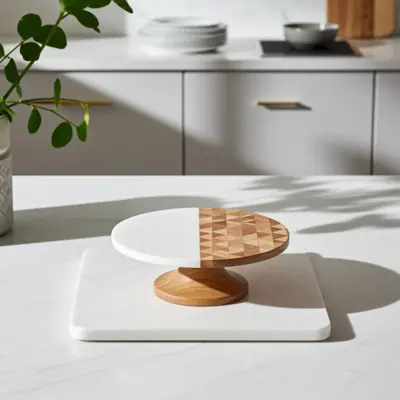 Custom Heavy-Duty Marble & Wood Riser - Commercial Grade - Razvi Exports
RAZ-DIS-004
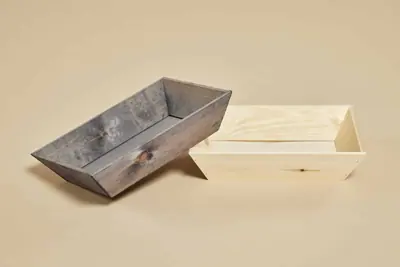 Tray
SCB-BOX-030
Why it matters
These are the choices this page decides. Getting them right at the sampling stage is what keeps cost and rework out of production.
Discuss your projectWho buys this
The same product is specified very differently depending on who is buying it. These are the briefs we see most often.
How we run it
We are a sourcing and product development partner rather than a single factory. Your project is matched to a specialist workshop in our manufacturing network, and one team stays accountable for the drawing, the sample, the production schedule and the inspection before dispatch.
Your product, sketch or reference photo becomes a working drawing: internal dimensions, wall thickness, opening mechanism and insert layout, with the trade-offs priced.
Before a full sample is made, you compare species, stain and coating on physical boards under your own lighting — the fastest way to avoid a colour surprise.
A physical sample of the actual construction is made and shipped for approval. Nothing goes into a production run before you sign off on it.
The approved sample becomes the standard. We coordinate the schedule with the workshop best suited to the structure, material and quantity, and report progress.
Units are checked against the approved sample during and after production — dimensions, finish, hardware and branding — then packed for the shipping route.
Export cartons, packing lists and shipping documents are prepared against the agreed trade term, and the shipment is coordinated with your forwarder or delivered to the named port.
Common questions
Yes — shelf depth, width and the height available above the shelf are the three dimensions we design to. Send them and we will lay out the tray to suit.
Yes, and it is often a good move: a tray that goes home with the product keeps the range grouped in the customer's space and reinforces the brand's presentation.
They can be fixed or removable. Removable dividers let one tray serve seasonal assortments without new tooling.
Deep enough that a product does not overhang and slide, shallow enough that two items deep are still visible. For most ranges that is one or two product depths.
Yes. Stackable formats use locating rails or a recessed base; nestable formats save space when empty.
Fabric wears first where fingers repeatedly reach in. We specify a tighter wrap or a wooden edge at those points.
Yes. Modular sizes that align side by side let a store build a larger display from standard units.
Yes, and it is the usual pairing: tray for the counter, box for the customer, in the same wood and lining.
Related
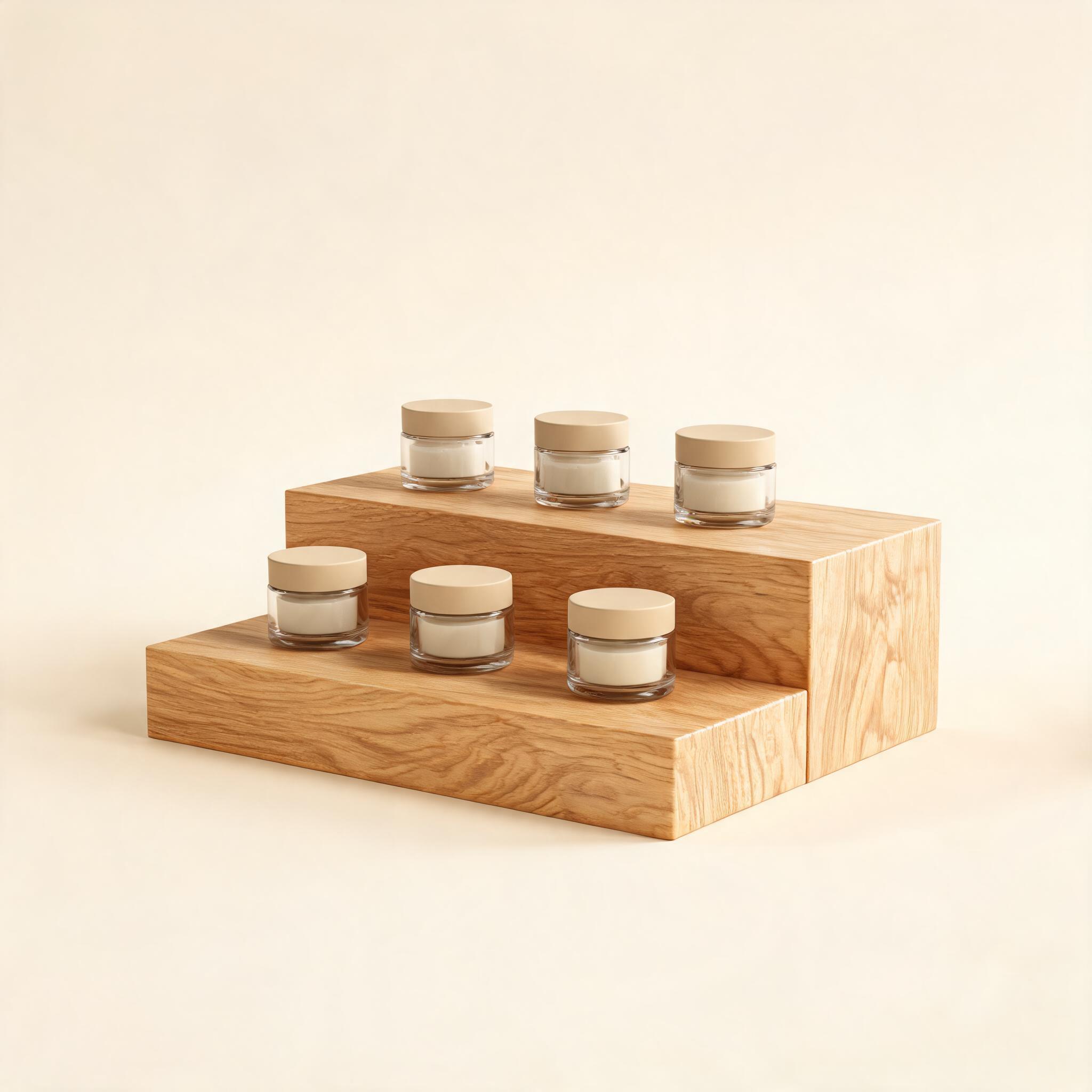
Compact counter units that keep the product visible and within reach.
Read more
Compact jewelry cases with soft-lined compartments for rings, necklaces and sets.
Read more
Freestanding wooden display stands for boutiques, events and shop floors.
Read moreBack to the range
Send the brief — we'll come back with structure, material and finish options for product display trays, plus a clear quotation.